

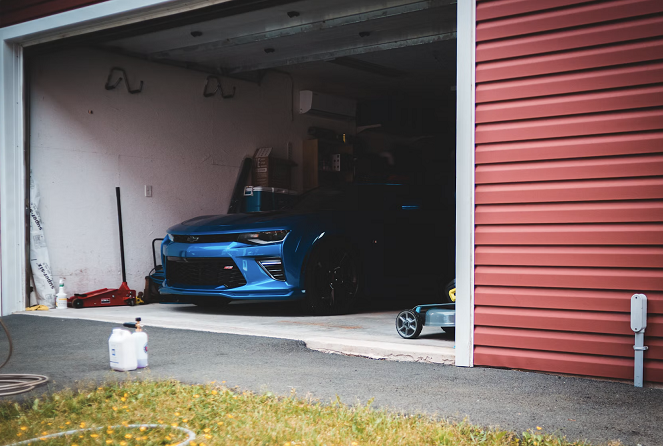
A garage door is one of the largest and heaviest moving objects in a home, and it works several times a day without much attention. When it sticks or refuses to close, the cause can be as small as a flat remote battery or as significant as a worn cable. Knowing which repairs belong to a technician makes the early decisions easier.
Local businesses that provide garage door repairs in Gold Coast treat them as one part of a wider range of work, which runs from simple home checks through to replacing major components, and it helps to see the whole range before deciding where a particular fault belongs.
Level One: Checks and Care at Home
For a door that is working but not quite right, the first steps are simple. Steel-Line, an Australian garage door supplier, suggests a visual check about once a month that takes roughly ten minutes. It covers the panels for cracks or dents, the rollers for chips or bent shapes, the tracks for debris and the rubber bottom seal for wear.
The same publisher’s troubleshooting guide starts with “the simplest explanations first”: power, remote batteries, safety sensors that need cleaning or realigning, and anything blocking the door’s path. It also advises lubricating moving parts such as hinges and rollers, but not the tracks.
Level Two: Help From a Technician
When home care is not enough, a technician can look at the door. Parts that wear in ordinary use, such as rollers, hinges, brackets and tracks, usually fall into this category. The guides describe replacing worn rollers and tracks as work for professionals and advise against tampering with hinges, though the rubber bottom seal is described as a relatively simple job for an owner. A door that does not respond may also have a sensor that is dirty, misaligned or blocked, which a technician can check.
Level Three: Springs and Cables
At the far end of the range are the parts that carry the door’s weight. The inspection guide calls the springs possibly the most important part of the system and warns against attempting repairs on them, while describing cable replacement as very dangerous for an owner to try. It says the door is constantly under extreme spring tension, which is why this work is left to technicians.
A door that does not hold its position when stopped part way, or one with frayed or kinked cable strands, is described as needing expert attention. What matters is understanding what is being replaced and why.
How This Work Is Usually Provided on the Gold Coast
Because a garage door is fixed to the house, repair work on the Gold Coast is normally carried out at the property. The path above therefore tends to start with a phone call or online booking and a visit, not a trip to a workshop. A household might begin with home checks and leave springs and cables to a professional from the outset.
It can be practical to choose a business that suits the household. Reasonable questions include which suburbs it covers, how arrival times are communicated and whether it works on the brand of door and opener already installed.
Climate matters too. The inspection guide notes that the cable near the bottom roller bracket deteriorates faster because of moisture, worth remembering in a humid coastal setting.
Planning Around the Visit
Clearing the space around the door makes a technician’s work easier. A few notes help: the make of the door and opener if labels are visible, when the problem started, and what the door does or sounds like. If the door will not open at all, think about how a vehicle will be moved in the meantime.